Lone Worker Check-In: Everything You Need to Know
Online Induction >> Lone Workers
Published 22/07/2026
Relying on a phone call or a note on a whiteboard to know whether someone working alone is actually safe is a genuinely risky way to run things. It's easy for a check-in to be forgotten, easy for a missed call to go unnoticed for hours, and hard to prove afterward that anyone was actually keeping track. This is why more organisations are moving lone worker check-in into a proper online system, one that keeps track of who's working alone, when they're due to check in, and what happens if they don't.

What Is Lone Worker Check-In?
Lone worker check-in is a system for confirming, at regular points, that someone working without direct supervision or colleagues nearby is safe and accounted for. In practice, it usually means a worker registers before starting a task, such as their location, the nature of the work, and how long it's expected to take, and then checks in again at set intervals or when the task is finished.
A lone worker is generally understood as anyone who works in a location where they can't be seen or heard by another person and can't expect help nearby if something goes wrong. That covers a wide range of roles, from someone doing a site visit alone to a worker on a night shift in an otherwise empty building.
Check-in itself can be as simple as a phone call or text to a supervisor, or it can run through a dedicated app or monitoring platform that logs each check-in automatically and raises an alert if one is missed. The manual version works, but it depends entirely on people remembering to make the call and someone else noticing if they don't, which is exactly where things tend to fall through the cracks.
Is Lone Worker Check-In a Legal Requirement?
It depends on where you're operating, but in most cases, some form of it effectively is, even if the law doesn't always spell out "check-in" by name. In the UK, health and safety regulations require employers to carry out a risk assessment for lone working that considers the specific risks created by isolation, and where that assessment shows a worker could be at risk, some form of monitoring or communication system is generally expected as a control measure. In the US, OSHA has specific rules for certain industries requiring employers to account for lone workers at regular intervals during a shift and again at the end of it. Sector-specific rules can push this further still: work in confined spaces, near live electrical systems, or at height often comes with added restrictions that make an unmonitored lone worker arrangement very hard to justify. Even where no single law names "check-in" directly, having a documented system in place is generally treated as the benchmark for demonstrating that an organisation is meeting its wider duty of care, particularly if something ever goes wrong and the arrangement is questioned afterward.
Who Uses Lone Worker Check-In?
Lone worker check-in shows up anywhere someone might reasonably be working without another person close by. It's common across a fairly wide range of industries and roles:
Field service and utility workers attending sites alone, such as engineers, technicians, and meter readers.
Healthcare and social care staff making home visits, particularly out of hours.
Security and facilities staff working night shifts or patrolling empty buildings.
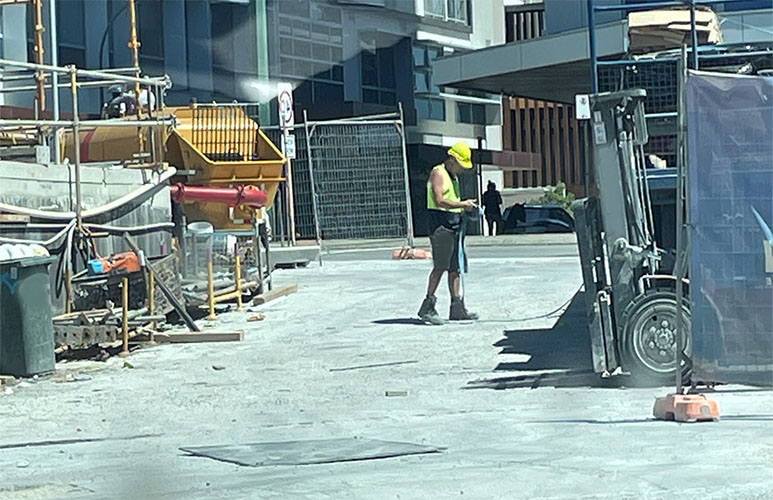
Construction and trades workers attending smaller jobs or working outside normal site hours.
Remote and outdoor workers, including surveyors, agricultural workers, and those in oil, gas, and mining who may be a genuine distance from help.
Retail and hospitality staff opening or closing premises alone.
Employers across most of these sectors carry some form of legal duty to consider the specific risks that come with isolation, which is part of why check-in procedures tend to be built into wider health and safety obligations rather than treated as optional extras.
How to Set Up a Lone Worker Check-In System
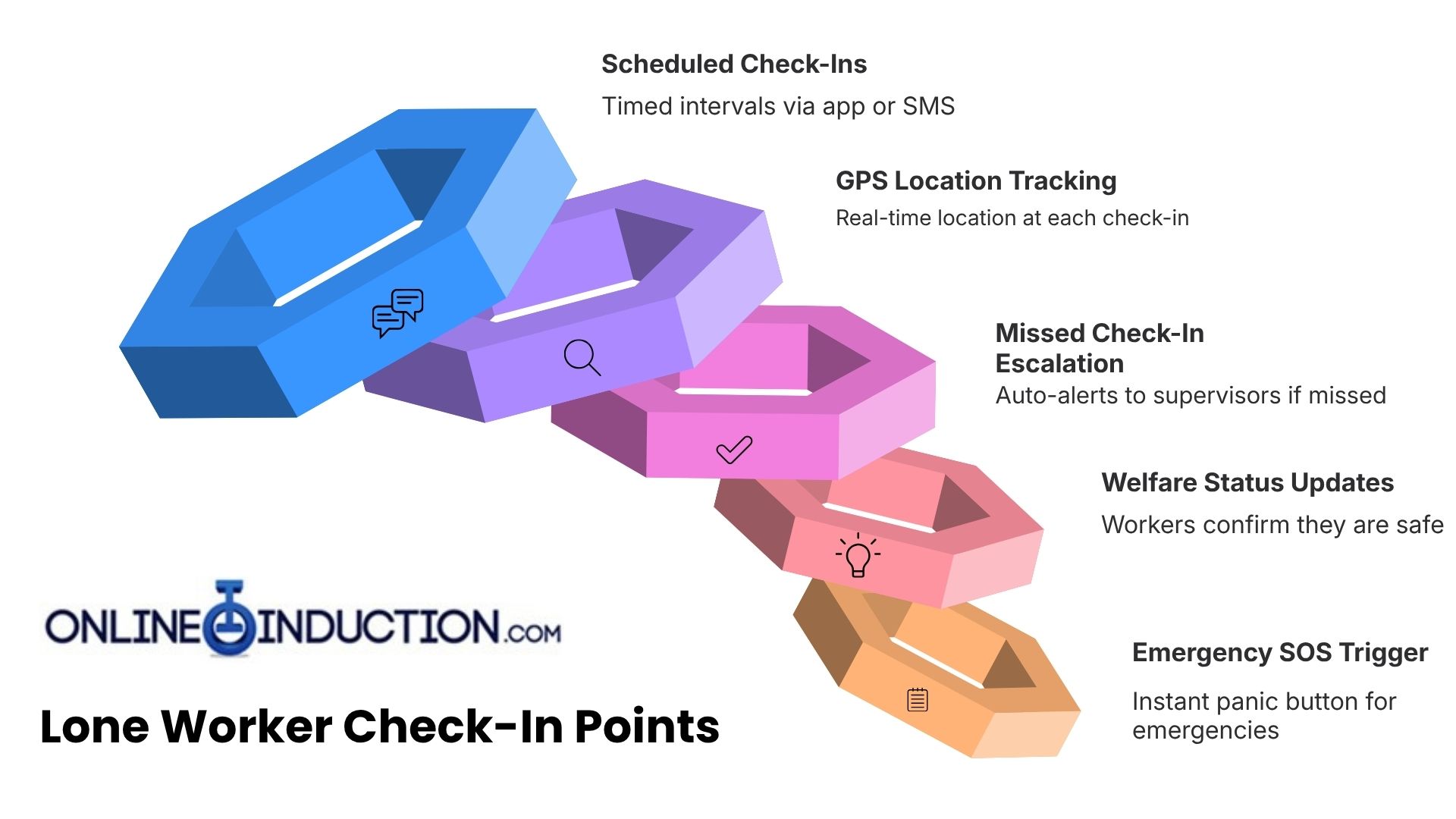
A workable lone worker check-in system tends to include a similar set of core elements, regardless of the industry:
1. Identify who counts as a lone worker, based on the actual conditions of the role rather than assumption, since two people in similar jobs can face very different levels of isolation.
2. Carry out a risk assessment for lone working that looks specifically at the risks created by working without immediate support nearby.
3. Set the check-in method, whether that's a phone call, text, app-based check-in, or automated monitoring device, based on the level of risk involved.
4. Define the check-in schedule, including start and end-of-task check-ins and any intervals in between for higher-risk work.
5. Nominate a monitoring contact, someone responsible for actually watching for missed check-ins and following up when one doesn't come through.
6. Build an escalation process, setting out exactly what happens, and in what order, if a check-in is missed.
7. Keep a record of check-ins and any escalations, both for accountability and to show, if ever needed, that the system was genuinely being followed.
Once the system is in place, it's worth reviewing it periodically and whenever a worker's role, location, or task changes meaningfully, since a check-in schedule built around one type of work may not hold up for another.
Does Every Lone Worker Need to Check In, or Just High-Risk Roles?
Not every lone worker needs the same level of check-in, but that doesn't mean lower-risk roles should be left out altogether. The right approach is generally to match the frequency and method of check-in to the actual level of risk involved. Higher-risk tasks, such as work in remote locations, confined spaces, or situations involving hazardous equipment, tend to call for more frequent checks, sometimes as often as every fifteen to thirty minutes. Lower-risk, routine lone work might only need a check-in at the start and end of a shift. What matters is that the decision is based on an honest risk assessment rather than a blanket assumption that some roles simply don't need checking on. Skipping check-in for a role just because it seems low-risk on paper can leave a real gap if circumstances on a given day turn out differently than expected.
How Often Should a Lone Worker Check In?
There's no single interval that applies across every job, since it depends heavily on the risk level of the task. As a general guide, higher-risk lone working, including remote sites, confined spaces, or work near hazards like live electrical systems, tends to call for checks at short, defined intervals throughout the task. Medium-risk work is often managed with periodic welfare checks at set points during a shift. Lower-risk, routine lone work may only need confirmation at the start and end of the task. Whatever interval is chosen, it should be documented clearly as part of the lone worker policy and consistently applied, since an interval that exists only informally tends to slip in practice.
What Happens if a Lone Worker Misses a Check-In?

A missed check-in should trigger a clear, pre-agreed escalation process rather than a judgement call made in the moment. In practice, this usually starts with an attempt to contact the worker directly, followed by contacting their nominated emergency contact if there's no response, and escalating to emergency services if the worker still can't be reached within a defined window. The exact timing of each step should be set out in advance as part of the lone worker policy, so nobody is left deciding on the spot how long is too long to wait. Missed check-ins should also be logged and reviewed, even when the worker turns out to be fine, since a pattern of missed check-ins can point to a wider problem with how the system is being followed, whether that's a scheduling issue, a coverage gap, or a worker who isn't checking in properly for other reasons.
Why Online Induction Is a Strong Fit for Lone Worker Check-In Management
Lone worker check-in managed through phone calls, texts, and manual logs runs into the same problems again and again. Check-ins get forgotten, missed calls go unnoticed for longer than they should, and there's rarely a reliable record showing exactly who checked in, when, and what happened when they didn't. Managing lone worker check-in through an online induction and workforce management platform addresses these gaps directly, rather than leaving lone worker safety to depend on someone remembering to make a call.
Online Induction brings contractor management, employee inductions, and workforce tracking together into one connected system. That matters for lone worker check-in in a few practical, grounded ways:
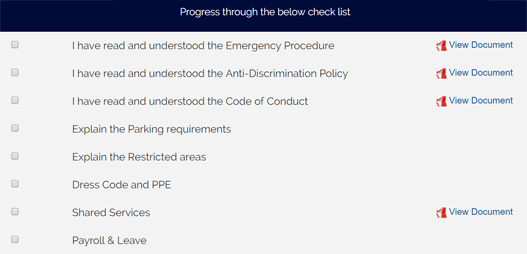
Lone worker status tied to induction and site records. Because worker details already sit within the induction and contractor management system, lone working requirements and check-in expectations can be set at the same point a worker is onboarded, rather than managed as a separate process.
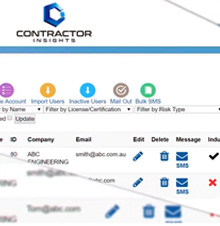
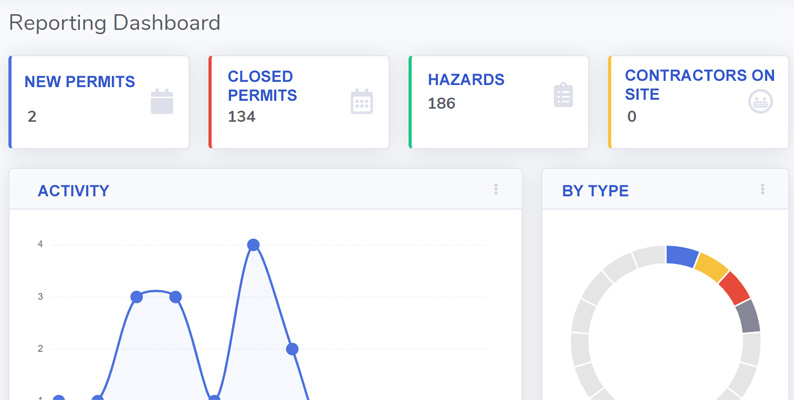
Digital check-in and a clear audit trail. Instead of relying on a phone call that may or may not be logged, check-ins happen within the system and are timestamped, giving management an honest, retrievable record of who checked in and when.
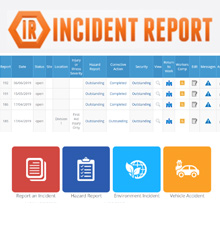
Missed check-ins are visible, not just remembered. Rather than depending on a colleague noticing a call didn't come through, the system can flag a missed check-in directly, reducing the chance that it goes unnoticed.
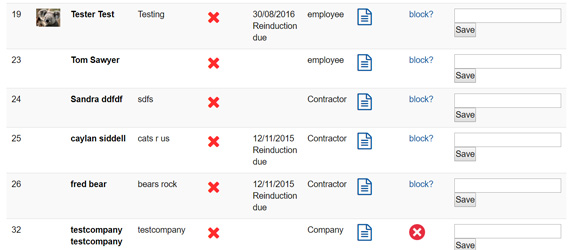
Centralised records across contractors and sites. Check-in history sits in one place rather than scattered across phone logs, texts, and personal notes, which matters for organisations managing lone workers across multiple sites or contractor teams.
Customisable to different risk levels. Check-in frequency and requirements can be tailored to different roles or tasks, so higher-risk lone working can be monitored more closely without applying the same rigid schedule to every worker.
For organisations that already manage inductions and contractor records digitally, bringing lone worker check-in into that same system is a fairly natural next step. It closes the gap between having a lone worker policy on paper and actually knowing, in real time, whether every lone worker is safe.