How Do Learning Management Systems Actually Charge You?
Published 29/10/2026

A breakdown of the three most common LMS pricing models and how to determine which one suits your organisation.
If you've attempted a learning management system pricing comparison, you'll know the frustration: vendors rarely publish transparent prices, and when they do, the figures only make sense once you understand the underlying pricing model. This guide clarifies the key differences.
Comparing LMS platforms is rarely straightforward. The technology across platforms is often comparable, but the way organisations are charged for it varies considerably. A system that appears affordable at first glance can become costly at scale, while a higher-priced platform may represent better value for a large or growing workforce.
The three dominant LMS pricing models are per-user (per-seat), per-course, and flat-fee (whole-of-organisation). Understanding how each works is the essential first step in any meaningful learning management system cost comparison.
Discover our LMS for safety-critical environments
Course library, skills matrix, renewal reminders and certificate management in one place.
LMS Pricing Model 1: Per-User Pricing (Per-Seat)
Under this model, the platform charges a fixed fee for each individual with an active account, typically billed monthly or annually. Some variants charge only for users who were active in a given billing period; others charge for every registered account regardless of activity.
How it works in practice
If your platform charges a set fee per user per month, your total cost is simply that rate multiplied by your headcount. Double your staff numbers and your LMS bill doubles with it. Volume discounts are common at higher tiers, but the core dynamic remains: your LMS cost is directly proportional to headcount.
Straightforward to budget for at a stable headcount. Smaller organisations pay proportionally less, and pricing typically includes access to all platform features and course content.
Costs escalate quickly during periods of growth or high contractor activity. Seasonal workforce fluctuations can produce unexpected billing, and organisations that need to train contractors, visitors, or casual staff alongside permanent employees will find this model expensive to manage.
LMS Pricing Model 2: Per-Course Pricing
Under this model, a charge is applied each time a course is assigned to or completed by a user. Rather than paying for platform access broadly, organisations pay for specific training activity. In some implementations the charge is triggered at assignment; in others, only third-party or premium courses attract a per-unit fee.
How it works in practice
Where a platform charges per completion, assigning a large number of courses across a sizeable group can produce a substantial monthly bill. Onboarding programs with multiple modules, or recurring compliance refreshers, accumulate costs quickly.
Organisations only pay for training that takes place, which can represent genuine savings where training volumes are low or highly targeted. It suits businesses that run a small number of defined compliance courses per year rather than ongoing development programs.
Costs are inherently difficult to forecast when training volumes change. The more significant concern is behavioural: when every course enrolment carries a direct cost, training managers may reduce training activity to manage budget. Any pricing model that introduces friction at the point of assigning training warrants careful consideration.
LMS Pricing Model 3: Flat-Fee Pricing (Whole-of-Organisation)
A flat-fee model charges a single fixed amount, typically monthly or annually, regardless of how many users access the platform or how many courses are completed. Within the agreed tier, usage is uncapped.
How it works in practice
The organisation pays one agreed fee. Training managers can assign courses to any number of users, including contractors, visitors, and seasonal workers, without incurring any additional cost. The per-learner cost decreases as usage increases, making this model more commercially attractive the larger and more active the workforce.
Completely predictable costs with no billing variation based on activity. No financial friction around assigning training, which supports a stronger and more consistent learning culture. Particularly well-suited to organisations that train beyond their permanent workforce, and to safety-critical industries where the frequency and reach of training directly affects compliance outcomes.
The upfront cost is higher than per-user pricing at small scale. Tiers may step up at certain organisational size thresholds, so establishing the right tier at contract negotiation is important.
Comparing the Three LMS Pricing Models
Each model behaves very differently as your organisation changes:
- Per-user pricing offers reliable cost predictability at a stable headcount but becomes difficult to manage when workforce composition is variable.
- Per-course pricing offers a low entry cost but introduces budget unpredictability and the risk of under-training.
- Flat-fee pricing requires a higher initial commitment but eliminates billing surprises, scales without penalty, and removes cost as a barrier to training activity.
For safety-critical environments
For compliance-focused and safety-critical environments in particular, the flat-fee model consistently presents the strongest case. Organisations operating in these sectors cannot afford a pricing structure that discourages training.
Questions to Ask Before Committing to an LMS
- How is an "active user" defined?The definition varies by platform and can significantly affect your invoice.
- Does the pricing include contractors and visitors?If training extends beyond permanent employees, confirm whether external users are covered or attract additional charges.
- What happens to pricing as headcount grows?Ask specifically about thresholds where pricing tiers increase and by how much.
- Are all courses included in the base fee?Confirm whether self-authored content, SCORM files, and third-party courses are treated consistently or priced differently.
- What else is included in the base price?Support, onboarding, integrations, and content libraries are often itemised separately from the platform fee.
Which LMS Pricing Model Is Right for Your Organisation?
The answer depends on workforce size and composition, training frequency, and how much importance your organisation places on cost predictability.
- Smaller businesses with stable headcount and modest training requirements will generally find per-user pricing the most accessible starting point.
- Organisations with very targeted, low-frequency training programs may suit per-course pricing, provided the risk of cost-driven under-training is actively managed.
- Organisations training at scale, or operating in sectors where training compliance is non-negotiable, will find flat-fee pricing the most commercially sound and operationally practical choice.

When conducting a learning management system pricing comparison, the headline rate matters less than the model behind it. A platform that appears cost-effective today may become the most expensive option as your organisation grows. Evaluate pricing against your actual training volumes, workforce composition, and projected growth before making a decision.
An LMS Built for Safety-Critical Environments
For organisations seeking a robust LMS designed for safety-critical environments, our LMS is a strong option to consider. It delivers a fully integrated learning management system that can be added on to your existing online induction process, making it a natural next step for organisations already prioritising compliance from day one.
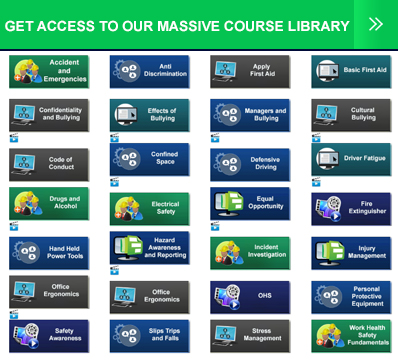
Easy to use for both administrators and learners, it includes a comprehensive ready-to-go course library, a built-in skills matrix, training needs analysis, automated renewal reminders, and certificate management. Built for organisations where training compliance is a genuine operational priority, it scales seamlessly with your workforce.