Workplace Wellbeing in Australia: Psychological Safety Regulations
Published 29/10/2026

In an increasingly fast-paced world, the mental wellbeing of employees has become a critical concern for businesses. Psychological health regulations are now in place to guide employers on identifying potential hazards and managing risks that could affect psychological health.
These regulations mark a significant shift in how businesses perceive and manage psychological health, recognising it as an integral part of overall workplace safety. They reflect the growing acknowledgement that mental health is not merely a personal issue but a collective responsibility that requires structured attention and intervention. With these guidelines, organisations can better navigate the complex landscape of psychological health, ensuring they are not only compliant but also proactive in fostering a healthy workplace culture and creating safer, more supportive environments for every team member.
Build a safer workplace from day one
Set expectations for speaking up and reporting concerns in your online inductions.
Why workplace psychological safety matters

When employees feel psychologically safe, they're more likely to take risks, voice their ideas without fear of ridicule, and engage with their work on a deeper level. This isn't merely about creating a pleasant workspace. It's about fostering an atmosphere where every team member feels valued and heard. The absence of fear leads to creativity, innovation, and ultimately, success.
In many organisations, employees hesitate to speak up because they worry about making mistakes or being judged. This silence can stifle innovation and block pathways to improvement. However, when psychological safety is prioritised from the top down, it encourages open dialogue and nurtures trust among teams. Leaders play a pivotal role here, not by micromanaging or dictating, but by listening actively and showing empathy. A culture that promotes psychological safety doesn't happen overnight. It requires commitment and intention from every level of management.
The benefits extend far beyond individual wellbeing. Teams that embrace psychological safety often show higher levels of collaboration and resilience during times of change or crisis. They adapt quickly because they're not afraid to experiment with new approaches or admit when something isn't working. This adaptability becomes a strategic advantage in industries where change is constant and rapid response is crucial. Imagine a workplace where meetings are filled with vibrant discussion instead of awkward silences, and where feedback flows freely without defensiveness. That's why investing in this part of workplace culture pays dividends.
Comparing psychological safety regulations across Australian states
In recent years, psychological safety in the workplace has gained significant traction across many sectors. As organisations strive to create environments where employees feel secure and valued, it's crucial to understand how each Australian state and territory safeguards this part of worker wellbeing. Psychological safety is the belief that you won't be punished or humiliated for speaking up with ideas, questions, concerns, or mistakes. It's a foundation that encourages open communication and fosters innovation within teams. Let's explore how each state is addressing this vital issue through legislation and workplace policy.
Psychosocial risk became an employer duty.
Read the detailsNSWNew South Wales
New South Wales stands out in promoting psychological safety by embedding mental health considerations into its work health and safety regulations. SafeWork NSW offers guidelines and resources to help businesses identify psychosocial hazards and implement effective control measures. Employers are encouraged to conduct regular risk assessments that focus not only on physical dangers but also on factors such as workplace culture, relationships, and workload management. By putting these protocols into practice, New South Wales ensures psychological safety is treated with the same importance as physical safety.
QLDQueensland
Queensland's approach is characterised by collaboration between government bodies, industry leaders, and labour representatives. The Queensland Government's Mental Health at Work Action Plan outlines clear objectives for improving mental health outcomes across industries. This includes initiatives such as tailored support services for high-risk occupations and funding for research into workplace stressors. These collaborative efforts ensure diverse perspectives help create safer work environments, while emphasising the shared responsibility of all stakeholders.
VICVictoria
In December 2025, the Victorian Government's new Occupational Health and Safety Regulations for psychological health came into effect. Psychosocial hazards, such as bullying, sexual harassment, aggression or violence, and exposure to traumatic events or content, continue to cause significant harm in Victorian workplaces. The new regulations strengthen existing workplace obligations and provide guidance on how to provide a psychologically safe working environment. Victoria emphasises prevention over cure, urging employers to address potential risks before they affect mental health, with training in stress management and conflict resolution playing a pivotal role. The changes align with regulations in other states and territories and clarify employers' existing legal obligation to provide a working environment that is safe and without risks to health, including psychological health.
WAWestern Australia
In 2022, Western Australia's work health and safety rules were updated to explicitly require employers to manage psychosocial risks. Under the Work Health and Safety (General) Regulations 2022, managing psychosocial hazards became a defined employer duty. The supporting Code of Practice, Psychosocial Hazards in the Workplace, guides risk identification across contexts, from office settings to remote or high-stress industries. WorkSafe WA stresses integrating psychosocial controls into overall WHS systems rather than separate HR-based wellbeing programs, making psychological safety a core part of workplace safety.
ACTAustralian Capital Territory
The ACT's updated Work Health and Safety (Managing Psychosocial Hazards at Work) Code of Practice took effect in November 2023, integrating psychosocial risk oversight into standard workplace health and safety audits. Regulators now assess whether employers not only have policies but also implement measurable controls and outcomes. Leadership accountability, documentation, and demonstrable action are emphasised, making psychological safety part of routine WHS compliance in the ACT.
NTNorthern Territory
Since July 2023, the Northern Territory's Work Health and Safety Regulations 2021 have required employers to manage psychosocial hazards under the same risk-management framework as physical hazards. The Code of Practice outlines hazards including work design, workload, isolation, poor support, and harmful behaviours. Psychosocial risk management must be embedded in standard WHS systems, not treated as a separate wellbeing initiative.
TASTasmania
Tasmania implemented amended WHS regulations in December 2022, introducing psychosocial risk provisions under the Work Health and Safety Regulations 2022 (Tasmania). From January 2023, the corresponding Code of Practice has guided employers in identifying and managing hazards such as high job demands, fatigue, and worker isolation. The approach is pragmatic, supporting early risk assessment and encouraging organisations to implement controls proactively.
SASouth Australia
South Australia has aligned with the national model through the Work Health and Safety (Psychosocial Risks) Amendment Regulations 2023. Employers are expected to identify, eliminate, or minimise psychosocial risks, factoring in the frequency, duration, and severity of exposure. The state emphasises worker consultation, documented risk registers, and clear communication of controls. Organisations must show active risk-management systems, not just policies on paper.
Despite variations in approach, the overarching goal is consistent: to protect psychological safety for workers throughout Australia. These efforts reflect a growing recognition of mental health as an integral part of employee wellbeing, and of the profound impact psychological factors have on productivity and job satisfaction. As states and territories continue to develop robust frameworks, employers must stay vigilant and adapt best practices to their own circumstances, so everyone benefits from protections that support a positive, sustainable workplace culture.
How can your organisation cultivate a psychologically safe environment?

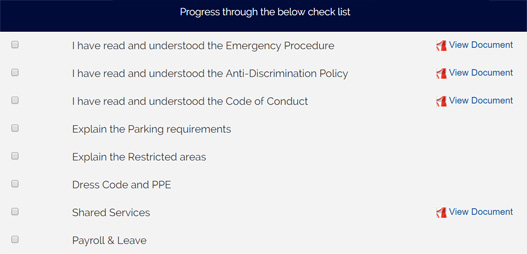
So how do you cultivate this kind of environment? Start by re-evaluating your induction system for new hires. It sets the tone for everything that follows. Include training focused on communication skills and emotional intelligence alongside traditional onboarding. Encourage managers to model vulnerability by acknowledging their mistakes as learning opportunities rather than failures to conceal. In doing so, you'll lay the groundwork for an inclusive culture where psychological safety not only exists but thrives across every department, transforming how business goals are achieved while nurturing each employee's potential along the way.
Ready to create online induction experiences that promote psychological safety?
Try Online Induction free
Build inductions that explain psychosocial hazards, show workers how to speak up, and set the tone for a safe culture from day one.