RAMS Online: The Complete Guide to Managing Risk Assessments Digitally
Online Induction >> RAMS OnlinePublished 25/07/2026
 Risk Assessments and Method Statements (RAMS) have always been a critical part of working safely and responsibly. But for a long time, managing them was anything but straightforward. Paper forms, email attachments, shared drives full of outdated versions - it worked, just about, but it was never efficient. RAMS Online changes that. Here's a complete look at what it is, how it works, and why more businesses are making the switch.

What Does "RAMS Online" Actually Mean?
RAMS stands for Risk Assessment and Method Statement. A Risk Assessment identifies the hazards involved in a task and evaluates the level of risk they present. A Method Statement describes, step by step, how the work will be carried out safely. Together, they form the backbone of safe working practice across almost every industry.
"Online" is the important word here. RAMS Online refers to managing this entire process digitally - creating documents, sending them for review, getting sign-off, and storing records, all through a cloud-based platform rather than through paper or disconnected desktop files.
The result is a process that's faster, more reliable, and far easier to audit.
Why Managing RAMS Manually Causes Problems
Before digital platforms existed, most businesses managed their RAMS through a combination of Word documents, email, and hope. Someone would create a document, send it around for comments, lose track of which version was current, and eventually file it somewhere it would never be found again.
This approach has some predictable consequences:
Documents get lost or overwritten
Approvals are hard to track - did the right person actually sign off?
Outdated versions end up being used on site
When audits happen, finding the right records becomes a project in itself
There's no visibility into what's outstanding or overdue
None of these are small problems. In industries where compliance and worker safety are on the line, gaps in your RAMS process can have real consequences - financially, legally, and in terms of the people doing the work.
How RAMS Online Solves This
A good RAMS Online platform addresses each of these issues directly.
Everything is stored in one place. Rather than documents scattered across inboxes and shared drives, a RAMS Online system gives you a single, centralized location for all your documentation. Anyone with the right permissions can find what they need immediately.
Version control is automatic. Every time a document is edited, the previous version is saved. You always know which version is current, and you can trace exactly what changed and when.
Approval workflows are built in. Instead of chasing sign-offs via email, you set up a workflow and the platform handles it. The right people get notified, they review and approve within the system, and every step is recorded with a timestamp.
Access from anywhere. Because it's cloud-based, RAMS Online works on any device -desktop, tablet, or mobile. Someone on site can pull up the current method statement without needing to call the office.
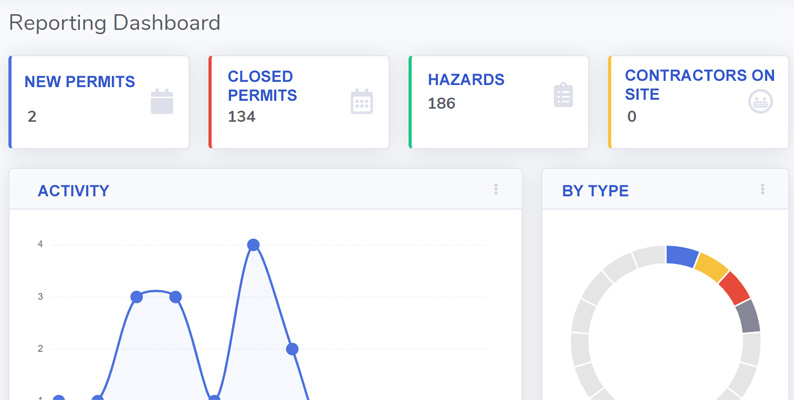
Audit trails are automatic. Every action taken on a document - who created it, who reviewed it, who approved it, when - is logged. When an auditor or inspector asks for records, you can produce them instantly.

Who Needs RAMS Online?
The short answer is: any organization that produces Risk Assessments and Method Statements. That covers a broad range of industries.
In construction and trades, RAMS documents are often a contractual requirement before work can begin on site. Managing them digitally means contractors can submit and receive approval without delays.
In facilities management, teams are often responsible for dozens of sites and hundreds of ongoing tasks. A RAMS Online system makes it possible to manage that volume without things falling through the cracks.
In manufacturing and logistics, where working environments carry real physical risks, having accurate, up-to-date method statements is essential - not just for compliance, but for keeping people safe.
In events and production, work environments change from one job to the next. Digital RAMS management lets teams adapt their documentation quickly and keep records organized across multiple projects.
In healthcare and professional services, documentation standards are high and accountability is non-negotiable. RAMS Online supports the kind of structured, traceable process these environments demand.
What to Look for in a RAMS Online Platform
Not all RAMS Online tools are the same. When evaluating your options, there are a few things worth paying close attention to.
- Ease of use matters. If the platform is too complex, people won't use it properly. Look for something with a clean interface that doesn't require extensive training.
- Templates save time. A good system will come with pre-built templates for common tasks, so your team isn't starting from scratch every time.
- Notification and reminder systems. Automated alerts keep approvals moving and prevent documents from sitting unreviewed.
- Scalability. Whether you're a small team or a large organization, the platform should work for your current size and grow with you.
- Support and onboarding. Switching from a manual process to a digital one takes a little adjustment. Good support during that transition makes a significant difference.
Who Uses RAMS?

RAMS is most closely tied to construction, though it isn't limited to it. Any business working with higher-risk tasks, including manufacturing, engineering, logistics, utilities, and facilities management, can reasonably use RAMS to plan safely.
Within construction, RAMS tends to show up at a few different levels:
Principal and main contractors use RAMS to show that site activities have been thought through properly and that safe systems of work are genuinely in place before anything starts.
Subcontractors and specialist trades are usually asked to submit RAMS before beginning on site, and it's often requested during tendering as evidence that a contractor takes safety seriously.
Site managers and safety officers review and approve RAMS, then use it to brief workers before higher-risk tasks begin.
Clients and public sector project owners frequently look over subcontractors' RAMS as part of their own due diligence before granting site access.
In short, wherever a main contractor or client needs reassurance that risk has genuinely been considered in advance, RAMS is the document that provides it, and it's often checked across every subcontractor and supplier on a project rather than just once at the start.
How to Set Up RAMS
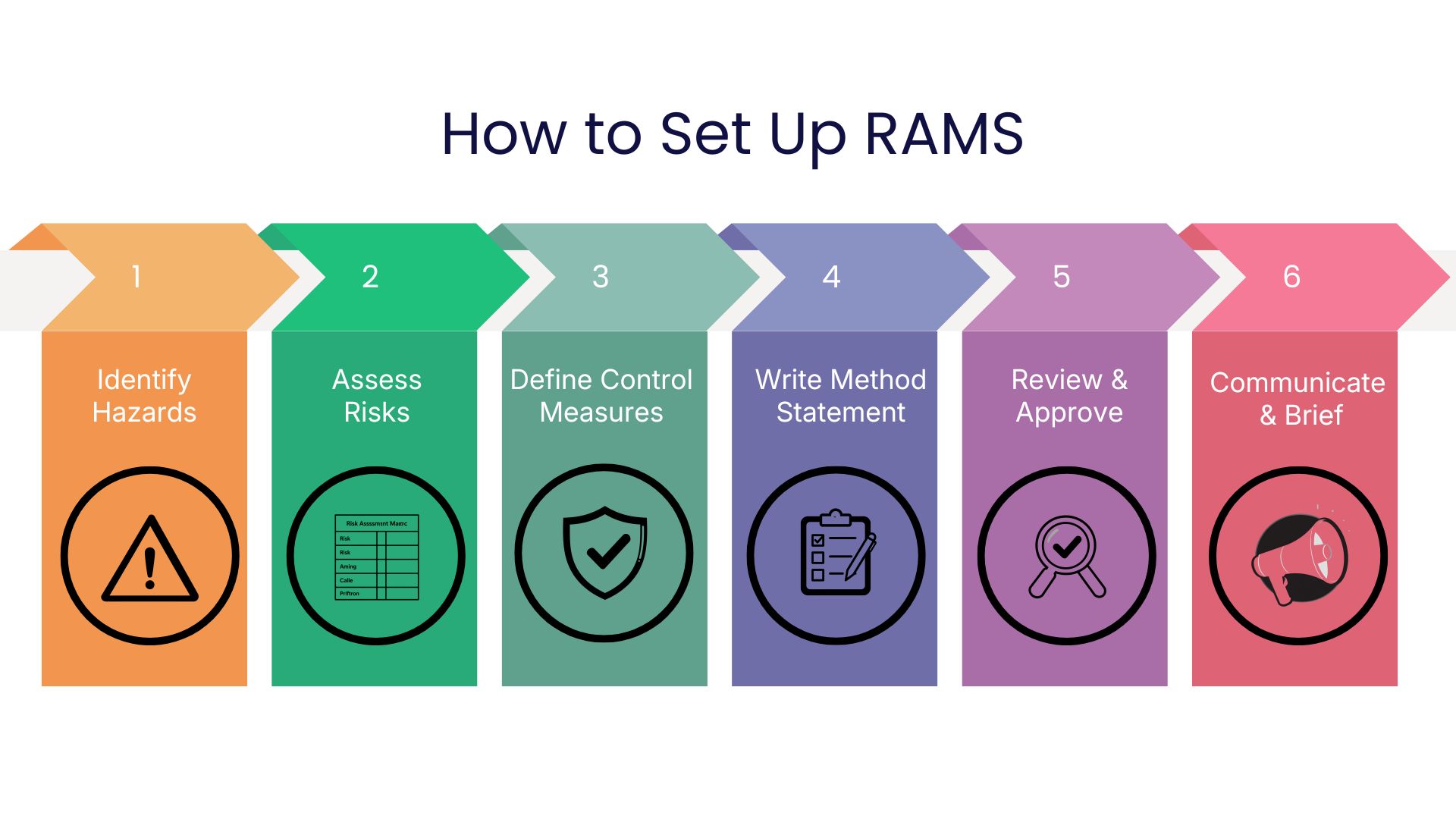
A well-built RAMS document tends to follow a fairly consistent structure, whether it's drafted in a Word document or built directly in a proper system. At minimum, it should include:
1. Project and task details, including the start date, expected duration, and the date the risk assessment was carried out.
2. Document control information, such as the author's name and a revision number, so any changes can be tracked honestly over time.
3. Key personnel, listing the managers, supervisors, workers, and subcontractors involved in the task.
4. Regulatory context, referencing any relevant laws, industry standards, or best-practice guidance that applies to the work.
5. Hazard identification, summarising the hazards drawn from the underlying risk assessment.
6. Step-by-step method, laying out a clear sequence of how the task will actually be carried out, with the relevant control measure noted at each step.
7. Sign-off and acknowledgement, confirming that every worker involved has genuinely read, understood, and agreed to follow the RAMS before starting.
Once drafted, a RAMS document should be reviewed and approved by a competent person, such as a site manager or health and safety advisor, then shared with everyone involved and signed off before work begins. It's also worth building in a routine review. RAMS should be revisited whenever the scope of work, site conditions, or personnel change, since a document that's fallen out of date can't really protect anyone.
Can RAMS Be Generic, or Does It Need to Be Site-Specific?
Generic RAMS templates certainly have their place. They're a sensible starting point and can save time on tasks that are genuinely standard and repeatable. But a RAMS document is only as useful as its relevance to the actual conditions on site, and a purely generic document is unlikely to hold up well to scrutiny. Site-specific factors, such as access arrangements, ground conditions, weather exposure, nearby workers or public areas, the equipment being used, and the sequence of other trades on site, can all genuinely change the level of risk and the controls needed. Good practice is to start from a template where one exists, then honestly adapt it to reflect the real task, site, and conditions before it's approved and signed off. Main contractors and clients reviewing RAMS will often send back documents that look copy-pasted and don't reference the specific job at hand.
How Long Do You Need to Keep RAMS on File?
There isn't one universal answer here, since retention requirements vary by country, industry, and the nature of the work involved. As a general guide, RAMS should be kept for the duration of the project and for a reasonable period afterward, in case of a claim, dispute, or investigation. Many businesses keep records for several years as standard practice, and longer where the work involves higher risks, such as asbestos or structural work, or where local regulations set a specific minimum. It's worth checking the retention rules that apply in your own jurisdiction and industry rather than assuming, and building that into your document management process from the start rather than treating it as an afterthought. This is one area where a proper RAMS management system genuinely helps: records are stored centrally and are far less likely to be misplaced than a file buried in someone's inbox or an old spreadsheet.
What Happens if RAMS Isn't Followed on Site?
Ignoring or deviating from an approved RAMS undermines the entire reason it exists, which is to prevent harm on tasks that carry real risk. In practice, failing to follow RAMS can lead to a few different outcomes. The task may be stopped on the spot by a supervisor or site manager, the worker or contractor involved may face disciplinary action, and depending on severity, the incident may need to be reported and investigated. If an accident happens and it later comes out that the RAMS wasn't followed, it can also carry serious legal and insurance implications for the business, since it may point to a wider failure to properly manage and enforce safety procedures. This is why sign-off, supervision, and clear records of who has acknowledged a RAMS matter just as much as writing the document well in the first place.
Why Online Induction Is a Strong Fit for RAMS Management
RAMS managed through spreadsheets, email threads, and untracked shared documents tends to run into the same problems again and again. Files get duplicated or fall out of date, sign-offs are hard to verify, and there's rarely a reliable way to prove, during an audit or after an incident, who actually read and acknowledged a RAMS before starting work. Managing RAMS through an online induction and contractor management platform addresses these issues directly, rather than treating RAMS as a separate, disconnected task bolted onto everything else.
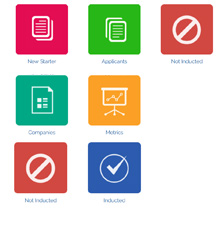
Online Induction brings contractor management, employee and site inductions, visitor sign-in, and contractor prequalification together into one connected system. That matters for RAMS management in a few practical, grounded ways:
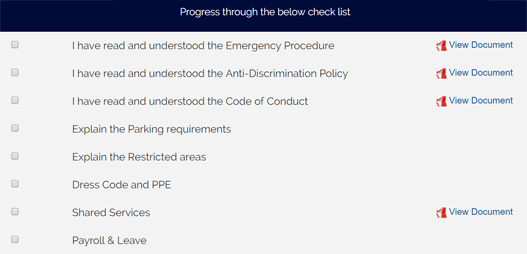
RAMS review built into the induction process. Because inductions, contractor management, and RAMS can sit in the same workflow, a worker simply can't complete their induction, and therefore can't get on site, without first engaging with the relevant RAMS.
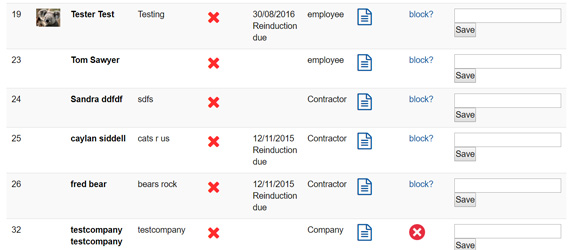
Digital sign-off and a clear audit trail. Instead of chasing replies over email or checking who's ticked a box on a shared spreadsheet, acknowledgement happens within the system itself and is timestamped, giving management an honest, retrievable record of who signed off on which RAMS and when.
Centralised, current documents. RAMS live in one place rather than being scattered across emails, shared drives, and spreadsheets, so everyone is signing off on the current version rather than something outdated.
Scales across contractors and multiple sites. The platform is built to work for small teams and large enterprises alike, which suits organisations trying to keep RAMS processes consistent across a whole supply chain.
Customisable rather than one-size-fits-all. Setup can be shaped around different trades, sites, or risk levels, so RAMS requirements don't need to be rebuilt from scratch for every new contractor or project.
The Bottom Line
RAMS Online isn't just a digital version of a paper process - it's a fundamentally better way to manage risk assessments and method statements. It gives businesses more control, better visibility, and stronger compliance without adding to anyone's workload. Once you've made the switch, going back to the old way is hard to imagine.
If your team is still managing RAMS through email and shared folders, it's worth taking a serious look at what an online platform could do for you.